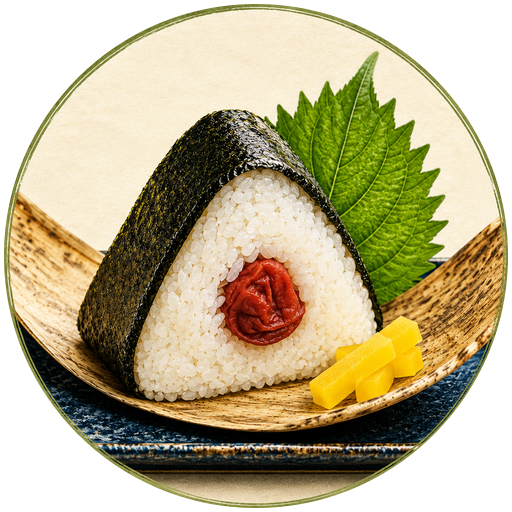

Some of the best onigiri in Japan are also the simplest: warm rice, a little salt, a strip of nori, and a sharp bite of pickled plum in the middle.
At home in Chiba, I make my own umeboshi, the pickled plums tucked inside some of Japan's best-loved rice balls. My training as a Vegetable Sommelier — a certification from the Japan Vegetable Sommelier Association — has shaped the way I look at everyday ingredients: a short, familiar label usually tells you more than a package that simply looks plant-based.
That matters here because tuna, salmon, pollock roe, and bonito flakes are common onigiri fillings, and even vegetable-based versions may contain fish stock. With the right ingredients, though, onigiri is an easy, satisfying vegan meal without substitutes or imitation seafood. The eight fillings below range from long-standing Japanese staples to combinations inspired by everyday home cooking; some go in the center, while others are mixed into the rice.
What Is Onigiri?
Onigiri is a Japanese rice ball made from cooked rice shaped by hand, usually into a triangle, round, or small cylinder. It's often lightly salted, filled or seasoned, and finished with a strip of nori.
In Japan, onigiri shows up everywhere: in lunch boxes, convenience stores, train stations, supermarkets, and home kitchens. It can be a quick breakfast, a packed lunch, or something to eat on the way to work.
Despite the name, a rice ball doesn't have to be perfectly round. The familiar triangular shape is especially common, partly because it's easy to hold and wrap with nori.
What makes onigiri good isn't complicated: rice that holds together without turning mushy, enough salt to bring out its flavor, and a filling that gives you a little contrast in every bite.
Is Onigiri the Same as Sushi?
Onigiri is usually made with plain cooked rice, while sushi rice is seasoned with rice vinegar, sugar, and salt. They serve different purposes, too: onigiri is everyday portable food, while sushi covers a broader range of dishes built around vinegared rice.
If you've bought a bag labeled "sushi rice," you can absolutely use it for onigiri. Just cook the rice and skip the vinegar seasoning.
Is Onigiri Vegan?
Onigiri can be vegan, although common fillings include salmon, tuna mayonnaise, pollock or cod roe, and bonito flakes. Even fillings that sound plant-based may contain hidden fish ingredients.
Seasoned kombu, for example, may be cooked with bonito-based dashi. Pickled greens can be flavored with fish extract. Furikake sometimes includes dried bonito, tiny fish, or egg.
Japan's official tourism organization notes that convenience stores often carry plum and kombu rice balls, even though many other varieties contain fish. Those options are a useful starting point, but the ingredient list still matters. Japan National Tourism Organization: Vegetarian and Vegan Guide
When you're making onigiri at home, the basics are already plant-based:
- Japanese rice
- Salt
- Plain nori
- A vegan filling or seasoning
Pay closest attention to the packaged fillings and seasonings, where fish-based ingredients are easiest to miss.
The Best Rice for Vegan Onigiri
Japanese short-grain rice is the best choice. Once cooked, the grains cling together naturally while staying tender and distinct.
Look for packaging labeled:
- Japanese short-grain rice
- Sushi rice
- Japonica rice
If Japanese short-grain rice is difficult to find, California-grown Calrose rice can work well. It's a medium-grain rice, not the same thing as Japanese short-grain rice, but its texture is close enough for a practical home version.
Avoid basmati, jasmine, and other long-grain varieties. They're excellent for other dishes, but they don't hold together as reliably. Freshly cooked rice is easiest to shape once it has cooled enough to handle comfortably; press gently so the finished onigiri holds together without becoming dense.
The filling matters, but so does the salt. For a simple shio onigiri, the grain size and intensity of the salt can noticeably change how the rice tastes. If you want to compare Japanese sea salts, see my guide to choosing the best salt for onigiri.
For salt amounts and where to add the salt when shaping by hand, with plastic wrap, or with a mold, see How to Salt Onigiri.
8 Authentic Vegan Onigiri Fillings
These eight fillings include traditional Japanese favorites and simple variations inspired by everyday home cooking.
1. Umeboshi: Japanese Pickled Plum
Umeboshi has enough salty-sour punch to season an entire rice ball, even when you use only a small piece. These pickled Japanese plums are usually tucked into the center after the pit has been removed; some are intensely salty, while others are milder or slightly sweet.
I make my own because I'm uncomfortable with the long lists of additives on many commercial packages, and homemade umeboshi is both simple and delicious. You don't have to make yours from scratch, though: additive-free versions are available online. Look for a short ingredient list built around ume plums, salt, and sometimes red shiso, and check for honey, bonito extract, or other nonvegan seasonings.
One example of a simple ingredient list appears on Eden Foods' umeboshi product page: ume plums, sea salt, and shiso leaves. Eden Foods: Umeboshi Plums
How to use it: Remove the pit, chop or mash the flesh, and place about ½ to 1 teaspoon in the center of each rice ball.
2. Kombu: Seasoned Kelp
Kombu is an edible kelp used throughout Japanese cooking. As an onigiri filling, it's usually cut into thin strips and simmered until savory and concentrated.
The version commonly sold for rice balls is often called kombu tsukudani. Its dark color and rich flavor come from ingredients such as soy sauce, sugar, and mirin, although some prepared versions also contain bonito-based dashi or fish extract. If you can't find a clearly vegan package, simmer thinly sliced rehydrated kombu with soy sauce, a little sugar, and water until the liquid reduces.
How to use it: Add 1 to 2 teaspoons of finely chopped seasoned kombu to the center.
Flavor: Savory, slightly sweet, and deeply concentrated.
3. Red Shiso Furikake
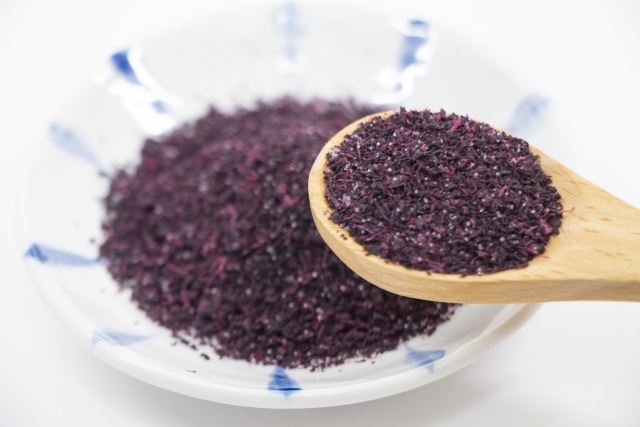
Red shiso furikake gives rice a tart, herbal flavor and a deep purple color. You may also see it sold as red shiso seasoning or yukari-style seasoning.
Instead of hiding this one in the middle, mix it into the rice before shaping. The color spreads quickly, and every bite picks up the same bright, slightly salty flavor. Start with a small pinch, taste, and add more if needed.
Some furikake blends contain bonito flakes, dried fish, egg, or dairy, even when the main ingredient sounds harmless. Choose a version made primarily from red shiso, salt, and other clearly plant-based seasonings.
How to use it: Mix about ½ teaspoon into the rice for one or two onigiri, adjusting to taste.
4. Sesame Miso
Miso and sesame make a simple filling that tastes richer than its short ingredient list suggests.
White miso gives you a milder, slightly sweeter result. Red miso has a stronger, saltier flavor. Either works, especially with toasted sesame seeds.
Stir together miso, ground or whole toasted sesame seeds, and a small amount of mirin or maple syrup if you want a little sweetness. Keep the mixture fairly thick so it stays inside the rice.
Check the miso label carefully. Some products contain dashi made from fish, even though the package may emphasize soybeans or traditional fermentation.
How to use it: Place about 1 teaspoon of sesame miso in the center of each rice ball.
Flavor: Nutty, salty, and gently sweet.
5. Soy-Glazed Shiitake Mushrooms
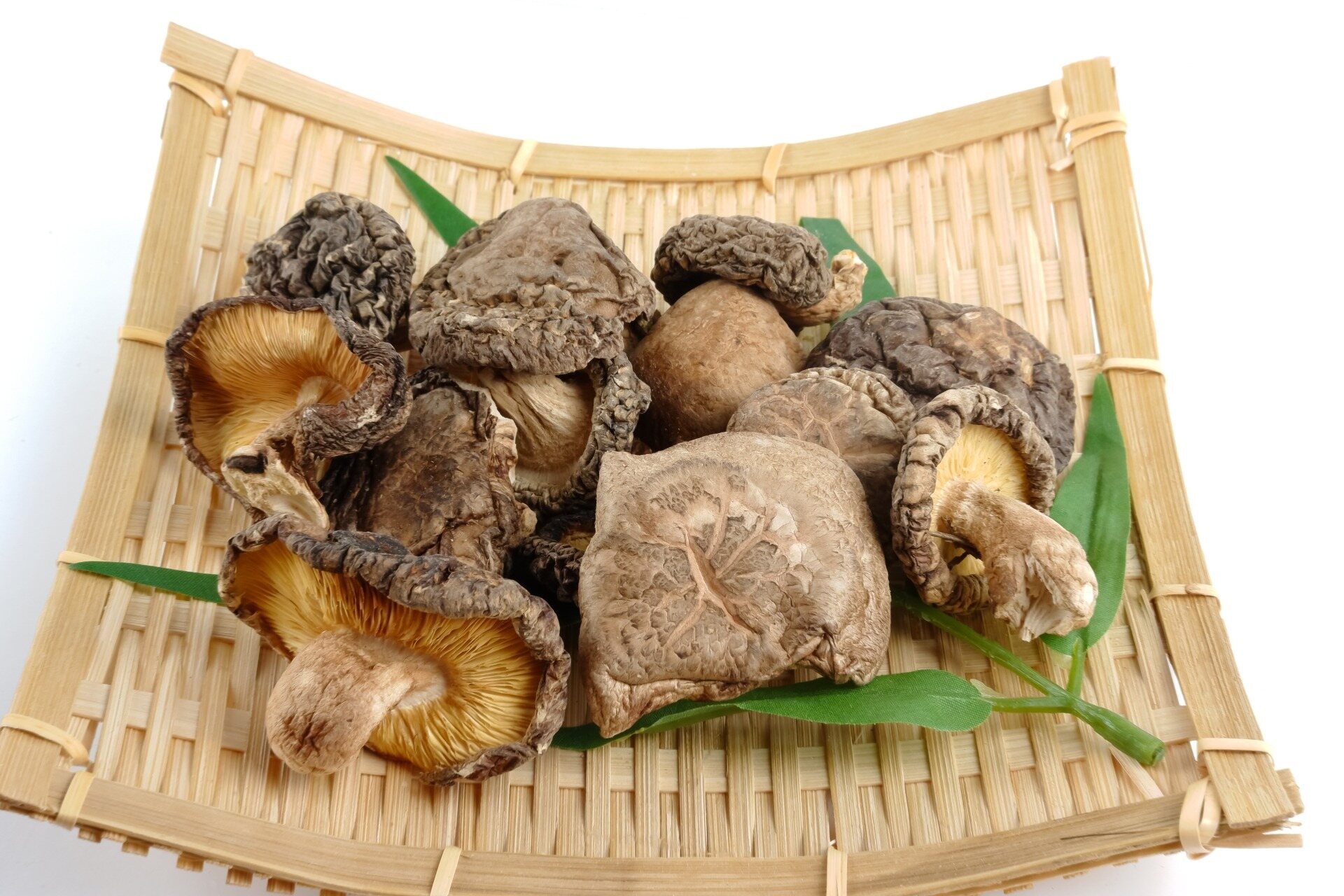
Dried shiitake mushrooms have a concentrated flavor that works especially well with plain rice.
Soak them in water until soft, remove any tough stems, and chop the caps finely. Cook them with a little soy sauce, a pinch of sugar, and a spoonful of the soaking liquid until the pan is nearly dry; too much moisture can make the rice difficult to shape and cause the onigiri to fall apart.
Fresh shiitake works too, but dried mushrooms bring a deeper, more pronounced flavor. If you use the soaking liquid, pour it slowly and leave any sediment behind.
How to use it: Add 1 to 2 teaspoons of the cooled mushroom mixture to the center.
Flavor: Earthy, savory, and slightly sweet.
6. Takana: Pickled Mustard Greens
Takana is a Japanese mustard green often sold pickled, chopped, or lightly seasoned. It has a pleasant sharpness that cuts through the softness of the rice.
You can tuck it inside the onigiri, mix it into the rice, or use a larger leaf to wrap the outside.
Some prepared takana contains bonito, seafood seasoning, or other fish-derived ingredients. A separate regional example from Japan's agriculture ministry uses Hiroshima-na, a different Japanese pickled leafy green related to Chinese cabbage, and lists bonito alongside ume and kombu. The recipe isn't about takana; it simply shows how a rice ball wrapped in vegetables can still include fish. Japan Ministry of Agriculture, Forestry and Fisheries: Hiroshima Pickled Greens Onigiri
If you can't find vegan takana, finely chopped pickled mustard greens or another tart, lightly salted leafy pickle can give you a similar effect.
How to use it: Chop finely and use 1 to 2 teaspoons as a filling, or mix a small spoonful directly into the rice.
Flavor: Tangy, peppery, and salty.
7. Edamame and Sesame
Edamame makes onigiri feel a little more substantial while adding color and texture.
Cook shelled edamame until tender, drain thoroughly, and roughly chop the beans if they're large. Mix them into warm rice with toasted sesame seeds and a small pinch of salt.
A few drops of sesame oil are optional, but use them sparingly so the rice still holds together. The filling's mild, nutty flavor makes it a good choice for anyone who finds umeboshi too sour or prefers a less salty filling.
How to use it: Mix 1 to 2 tablespoons of chopped edamame and a little sesame into the rice before shaping.
8. Kinpira Gobo: Burdock and Carrot
Kinpira gobo is a familiar Japanese side dish made with thinly cut burdock root and carrot, usually cooked with soy sauce and a little sweetness.
Using it inside onigiri is more of a home-cooking variation than a standard convenience-store filling, but the combination makes sense: crunchy vegetables, savory seasoning, and soft rice.
Chop the cooked kinpira into small pieces so the rice is easier to shape. Traditional recipes sometimes use dashi, so check prepared versions or make your own with water or kombu stock. If burdock root isn't available, carrot alone still works nicely, especially with toasted sesame.
How to use it: Add 1 to 2 teaspoons of finely chopped kinpira to the center.
Flavor: Savory, slightly sweet, and pleasantly earthy.
Easy Vegan Onigiri Recipe
This basic method makes six rice balls, roughly 120–135 g each, and works with any of the fillings above. For smaller, convenience-store-style onigiri, divide the rice into seven or eight portions instead.
- Prep time: 15 minutes
- Cook time: 25 minutes
- Total time: 40 minutes
- Optional rice-soaking time: 20 minutes, not included in the total
- Yield: 6 onigiri
Ingredients
- 2 cups Japanese short-grain rice, about 360 g, or roughly 2⅓ to 2½ Japanese rice-cooker cups
- Approximately 2¼ cups water, about 530 ml, or the amount recommended on the rice package
- ½ to ¾ teaspoon fine salt, plus more if needed
- 2 full sheets plain nori, cut into 6 strips total, 3 per sheet
- 6 to 12 teaspoons vegan filling, depending on the variety
- Toasted sesame seeds, optional
A Japanese rice-cooker cup holds about 180 ml and is smaller than a standard U.S. measuring cup. If your cooker came with its own cup, measuring the rice by weight is the clearest option; otherwise, use roughly 2⅓ to 2½ cooker cups and follow your machine's water-level markings.
Instructions
- Rinse the rice. Place the rice in a bowl and cover it with cold water. Swirl gently, drain, and repeat until the water looks less cloudy.
- Soak if you have time. Let the rinsed rice sit in fresh water for about 20 minutes. This step is optional but can help the grains cook more evenly.
- Cook the rice. Use a rice cooker or follow the package instructions on the stovetop. Once the rice is done, let it rest, covered, for about 10 minutes.
- Prepare the fillings. Chop any large pieces and make sure cooked fillings have cooled. Wet fillings should be drained or cooked down.
- Get ready to shape. Lightly dampen clean hands and rub a small amount of salt between your palms. Alternatively, use food-safe plastic wrap to shape the rice without handling it directly.
- Add the filling. Scoop about one-sixth of the rice into your hand or onto the plastic wrap, aiming for roughly 120–135 g per onigiri. Flatten it slightly, place 1 to 2 teaspoons of filling in the center, and cover with a little more rice if needed.
- Shape gently. Press just firmly enough to form a triangle or round. Avoid squeezing so hard that the rice turns dense.
- Add the nori. Wrap a strip around the bottom or side of each rice ball. For crisp nori, wait until just before serving.
- Serve. Eat while the rice is still pleasantly warm, or cool and store safely for later.
For fillings such as red shiso, edamame, or chopped takana, mix the seasoning into the rice first and skip the filled-center step.
Japan's agriculture ministry recommends using plastic wrap when shaping onigiri to reduce direct hand contact with the rice. The linked guidance is in Japanese. Japan Ministry of Agriculture, Forestry and Fisheries: Food Poisoning and Staphylococcus (Japanese-language source)
A Few Small Details That Make a Difference
Salt your hands lightly rather than heavily seasoning all the rice at once; you'll have more control, and strongly flavored fillings won't become overwhelming. Keep the fillings compact, too, so the rice closes neatly around the center.
Use plain roasted nori. Some seasoned seaweed products contain fish-derived flavorings, while a straightforward roasted nori product may list seaweed as its only ingredient. Yamamotoyama: Roasted Nori for Rice Balls
For an online shopping option, see gimMe Sushi Nori Seaweed Wraps, 23 g (paid link) on iHerb. Cut the sheets into strips to wrap your onigiri, and check the product page for current availability and delivery options for your country.
And if the first rice ball looks a little uneven, that's normal. Homemade onigiri doesn't need sharp corners to taste good.
Bonus Variation: Vegan Yaki Onigiri
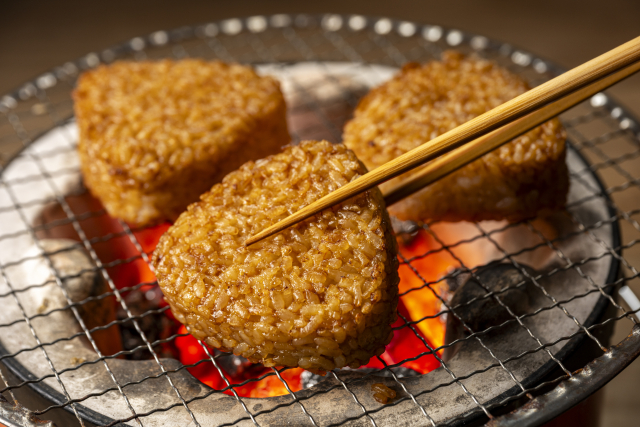
Yaki onigiri is grilled onigiri with a crisp, lightly browned exterior.
Start with a plain or lightly seasoned rice ball. Brush both sides with a small amount of soy sauce, then cook in a lightly oiled skillet over medium heat until the outside turns golden.
You can also mix a little miso with water and brush that over the surface near the end of cooking.
A few things help:
- Shape the rice ball a little more firmly than usual.
- Let one side brown before trying to flip it.
- Brush lightly; too much sauce can make the surface soggy.
- Use gluten-free tamari if needed.
The result is crisp around the edges, soft in the middle, and particularly good with a cup of green tea.
Japanese Ingredient Labels to Check
Packaged fillings and seasonings can be harder to evaluate than plain rice or nori. These terms are useful to recognize:
| Ingredient | Japanese label | Why it matters |
|---|---|---|
| Bonito flakes | かつお節 | Made from dried fish |
| Bonito extract | かつおエキス | Fish-derived flavoring |
| Fish stock | 魚介だし | Stock made with seafood |
| Dried sardines | 煮干し | Fish used in broth and seasoning |
| Tuna | ツナ / まぐろ | Common nonvegan filling |
| Salmon | 鮭 / サーモン | Common nonvegan filling |
| Fish roe (pollock/cod roe) | たらこ / 明太子 | Seafood-derived filling |
| Shrimp | えび | Sometimes used in furikake or seasoning |
| Egg | 卵 | May appear in furikake or mayonnaise |
| Milk ingredients | 乳成分 | Occasionally added to packaged seasonings |
| Honey | はちみつ | Found in some sweetened umeboshi |
| Meat extract | 肉エキス | Animal-derived seasoning |
The word dashi doesn't automatically tell you whether something is vegan. Kombu dashi can be plant-based, while bonito dashi is not.
When a package isn't clear, choose products with shorter ingredient lists or prepare the filling yourself.
How to Store Vegan Onigiri Safely
Cooked rice needs careful handling because Bacillus cereus can become a concern when rice or other leftovers sit at room temperature for too long. FoodSafety.gov specifically identifies rice among the foods associated with this bacterium and recommends refrigerating cooked food promptly. FoodSafety.gov: Bacteria and Viruses
For onigiri, follow the CDC's general rules for cooked leftovers: refrigerate within two hours, or within one hour when the surrounding temperature is above 90°F (32°C), and keep your refrigerator at or below 40°F (4°C). Centers for Disease Control and Prevention: Preventing Food Poisoning
After shaping, arrange the onigiri in a single layer on a tray or in a wide, shallow container instead of stacking them. Refrigerate them promptly so the rice cools quickly; there's no need to leave them at room temperature until they're completely cool.
For packed lunches:
- Use freshly cooked rice.
- Wash your hands and work on clean surfaces.
- Consider shaping the rice with food-safe plastic wrap.
- Avoid fillings that are very wet.
- Use an insulated lunch bag and an ice pack when necessary.
- Add the nori just before eating if you want it to stay crisp.
Refrigerated rice can become firm. If you're reheating properly stored onigiri, heat it thoroughly to 165°F (74°C) and let it cool slightly before eating. Reheating isn't a fix for rice that was left out too long. FoodSafety.gov: Safe Minimum Internal Temperature Chart
For longer storage, wrap individual rice balls and freeze them. Add fresh nori after reheating.
Frequently Asked Questions
Can I find vegan onigiri at Japanese convenience stores?
Umeboshi and kombu are often the most promising options, although recipes vary by brand and location. Check for bonito extract, fish-based dashi, honey, and other animal-derived ingredients.
Do I need nori to make onigiri?
Nori makes onigiri easier to hold and adds flavor, but it isn't essential. Rice balls can also be served plain, coated with sesame seeds, or wrapped in pickled greens.
Can I make onigiri with brown rice?
Yes, although brown rice doesn't stick together as easily as Japanese short-grain white rice. A mixture of brown and white rice is often easier to shape than brown rice alone.
Is vegan onigiri gluten-free?
Rice, plain nori, umeboshi, and vegetables are naturally gluten-free, but regular soy sauce usually contains wheat. Use certified gluten-free tamari and check any prepared miso, furikake, or pickled ingredients.
Can I make onigiri ahead of time?
Yes, but store it safely and keep the nori separate until serving. The rice is usually at its best on the day it's made.
Why does my onigiri fall apart?
The most common causes are using long-grain rice, letting the rice get too cold, adding too much filling, or using a filling that's too wet. Japanese short-grain rice and a light, even pressure usually solve the problem.
What to Serve With Vegan Onigiri
Onigiri can be a meal on its own, but it also fits naturally into a simple Japanese-style lunch.
Try it with:
- Miso soup made with kombu or shiitake stock — see Is Dashi Vegan? for how to check the stock.
- Quick cucumber pickles
- Steamed or chilled edamame
- A small seaweed salad with vegan seasoning
- Green tea or roasted barley tea
You don't need to build a complicated spread. One well-made rice ball, a bowl of soup, and something crisp on the side are more than enough.
Related Japanese Vegan Guides
Japanese Vegan Food: Everyday Ingredients and Eating Habits
Learn which everyday Japanese foods can be plant-based and what to check on ingredient labels.
Japanese Pantry: Vegan Ingredients and Seasonings
Explore miso, kombu, nori, sesame, and other ingredients used in Japanese vegan cooking.
More Japanese Vegan Recipes
Browse approachable plant-based Japanese dishes and practical cooking guides.